Challenge
Intel Core supports very different tasks, from coding and creative work to gaming. The challenge was to give each one a clear visual identity while keeping all four districts connected as one city.
Intel
Intel iCore City turned the world inside a processor into a living, futuristic city. Data became roads, code shaped the architecture and Intel Core powered everything from the center. The film travelled through four connected districts, each showing a different side of the technology: coding, creative work, gaming and the processing power behind them.
Intel Core supports very different tasks, from coding and creative work to gaming. The challenge was to give each one a clear visual identity while keeping all four districts connected as one city.
Director Maciej Szewczenko came up with the idea of turning the processor into iCore City, using its structure as a foundation for architecture, roads and flowing data. Together with Maciej, we created the Intel world, translating that idea into a visual system that could work across four distinct districts. My work covered previz, asset creation, look development, lighting and final rendering, keeping the city consistent from the first camera tests to the final frames.
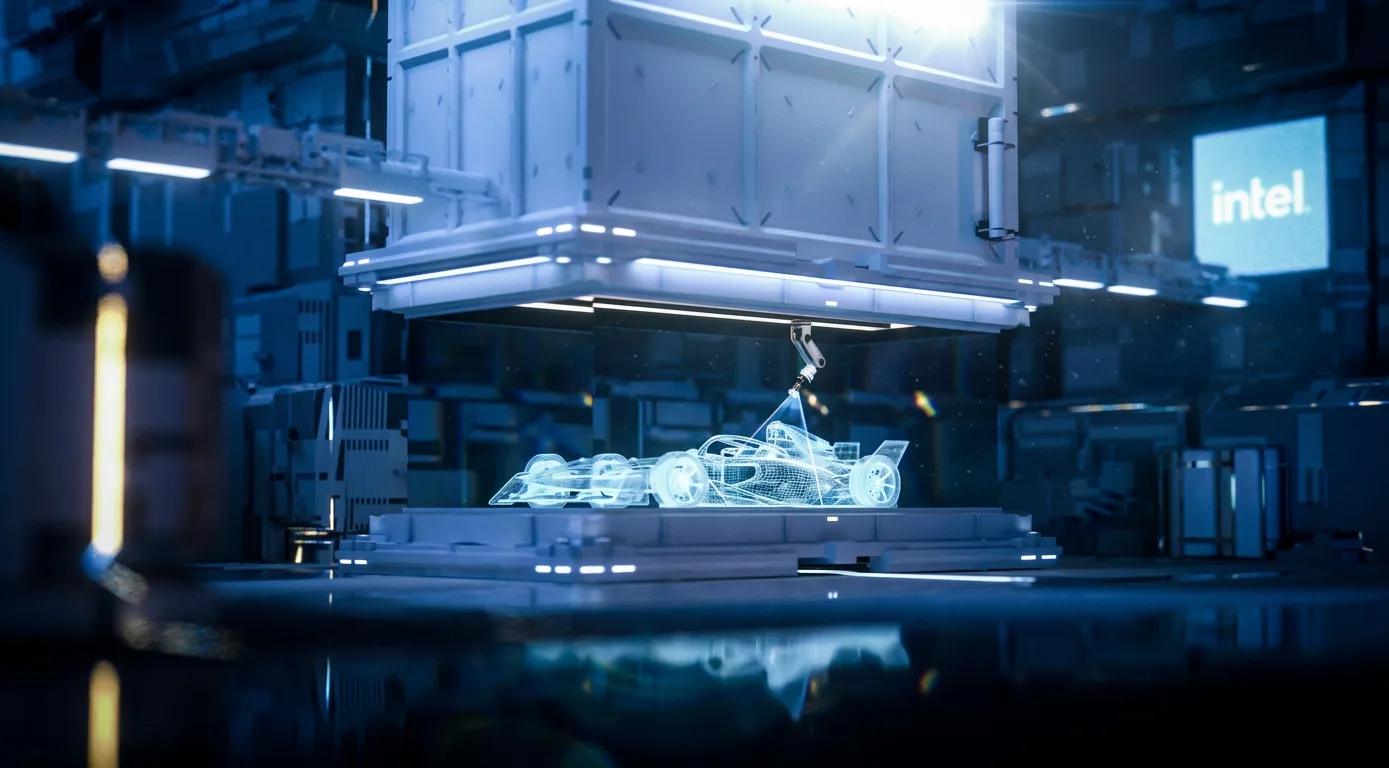
I started by building the previz and planning how the camera would travel through iCore City.
This stage helped us find the right scale, pace and order of each reveal. It was important to understand when we should stay close to a surface, when to open the view and when to show the full size of the city.
The previz became a guide for the next stages. It defined the camera paths, key moments and transitions between the districts before the detailed production began.
I worked on the 3D assets needed to turn the idea into a complete city.
The world was built from modular architecture, glass towers, code surfaces, data streams, tunnels and floating structures. The central iTower became the main landmark, with its shape built around the Intel "I".
Each district needed its own visual signs. Code Lab was filled with moving data and floating forms. Creators District used light grids and design structures. Gaming District added more speed, energy and action.
The assets had to support close shots as well as wide city views, so every part needed the right level of detail.
The look combined dark architecture, glass, metal, live code and strong neon light.
I developed a visual language that made the city feel advanced but still clear. Transparent surfaces, reflections and moving data added depth, while simple shapes helped the viewer understand the scale.
The goal was not to copy a typical sci-fi city. We wanted the whole world to feel like it was built from technology and powered from within.
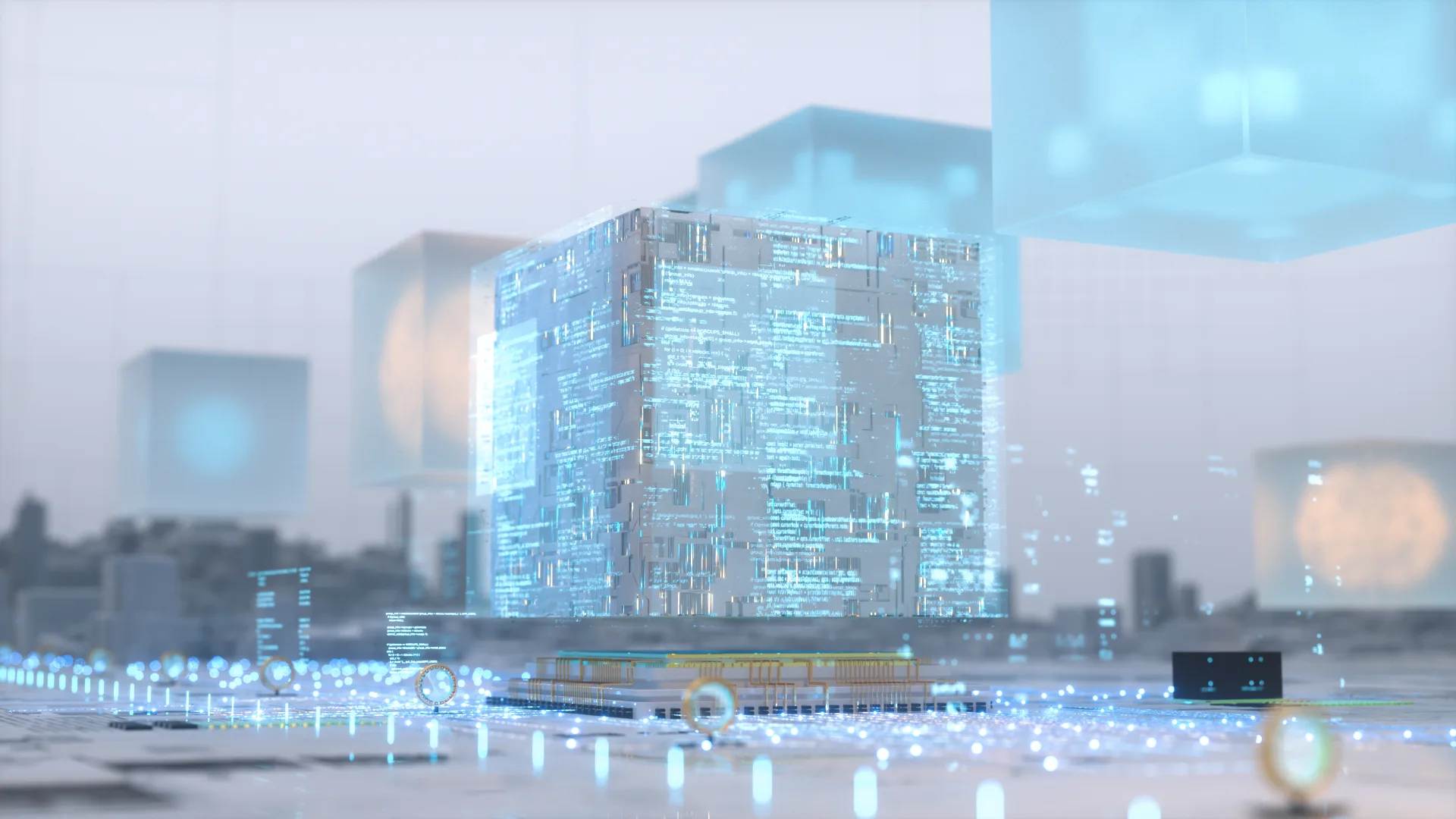
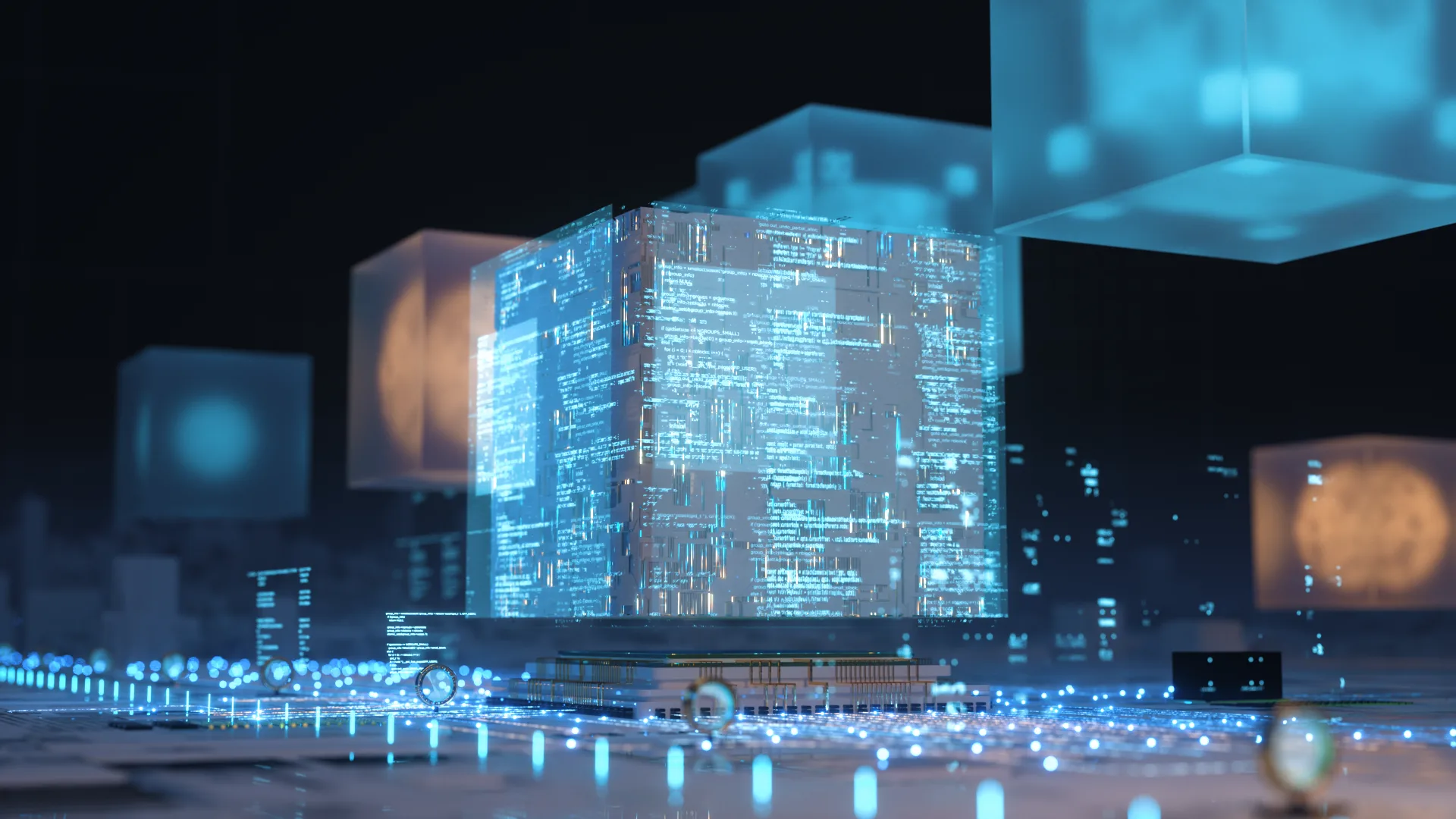
Light was one of the main building blocks of iCore City.
It showed how data moved, shaped the architecture and guided the viewer through each shot. It also helped separate the four districts while keeping them inside the same visual world.
I used contrast, color and light flow to give the city scale and depth. The lighting moved from small details inside the code to large beams connecting whole parts of the city.

In the final render stage, I brought together the assets, materials, lighting and camera work into one finished image.
The city contained many reflective, transparent and glowing surfaces. The key was to keep all this detail rich without making the frames hard to read.
Every shot needed a clear focus, strong depth and enough detail to make the city feel real. At the same time, the visual energy had to support the main idea: Intel Core is always working at the center of the experience.

The final film turned a complex technology story into a journey through one connected world.
Instead of showing a list of features, we gave each part of Intel Core a place inside the city. Code became architecture. Data became movement. Processing power became light, scale and life.
My role across previz, assets, look development, lighting and final rendering helped keep that idea consistent through every stage of production.