Mitsubishi

Outlander PHEV

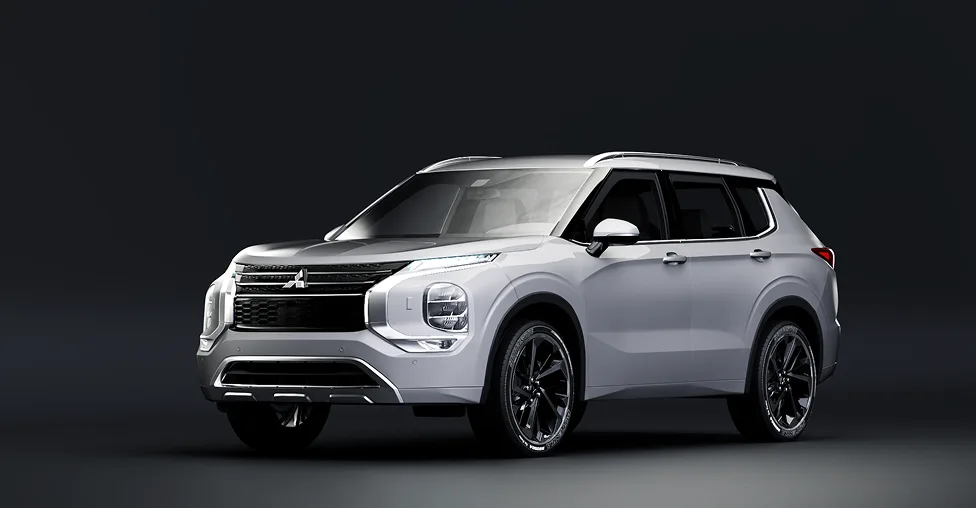
A new digital experience for the 2025 Mitsubishi Outlander PHEV range. The project combined a clearer way to explore and compare trim levels with a visual system designed to give each model more presence, energy and distinction.

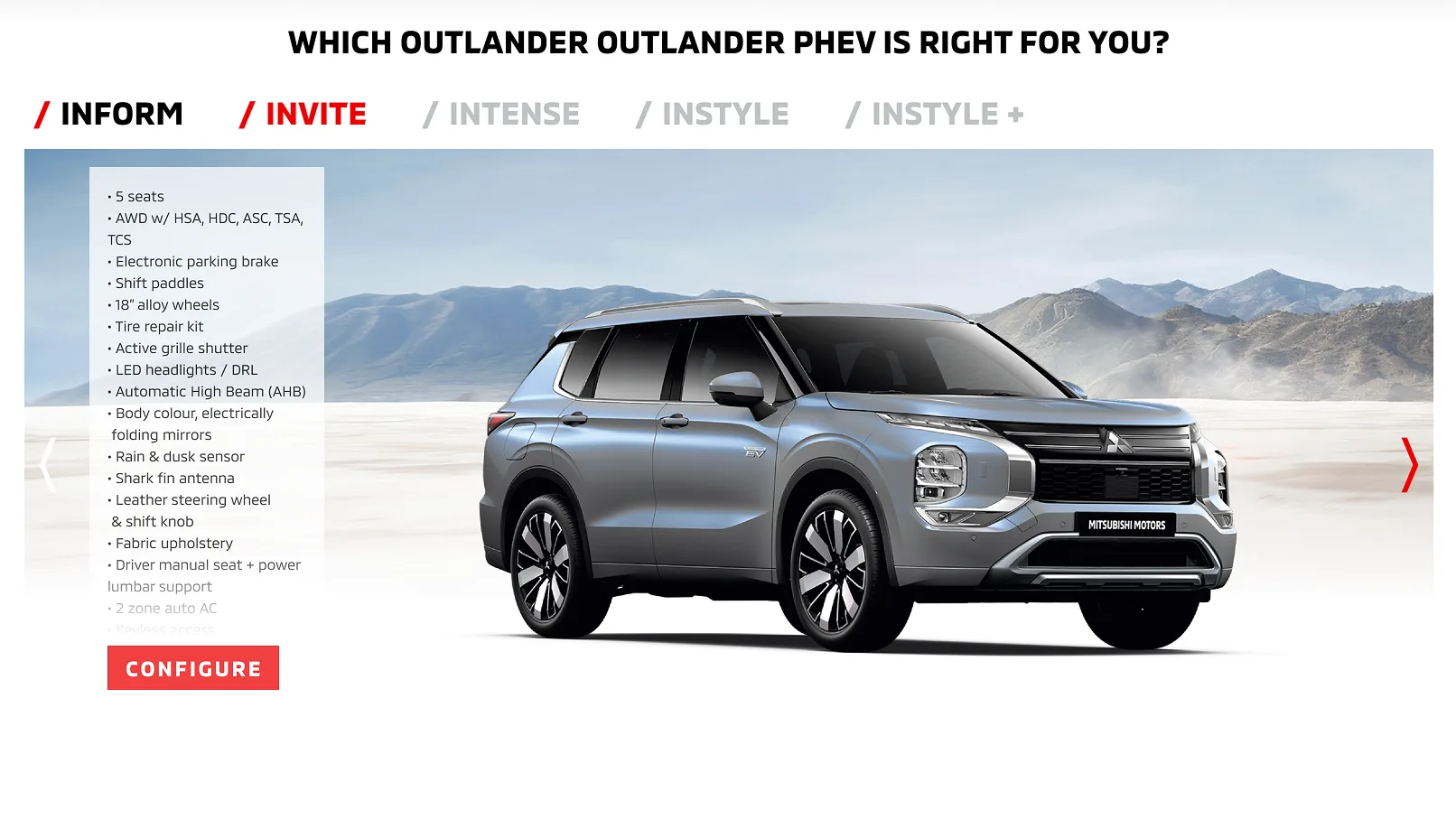
The existing model selector placed specifications over a single vehicle image, making the information difficult to scan and the differences between versions easy to miss. It presented the range functionally, but did little to build interest in the vehicle or encourage people to explore beyond the first model. The task was to make the experience clearer without reducing it to another specification table — and to give Mitsubishi’s flagship SUV a stronger visual presence.
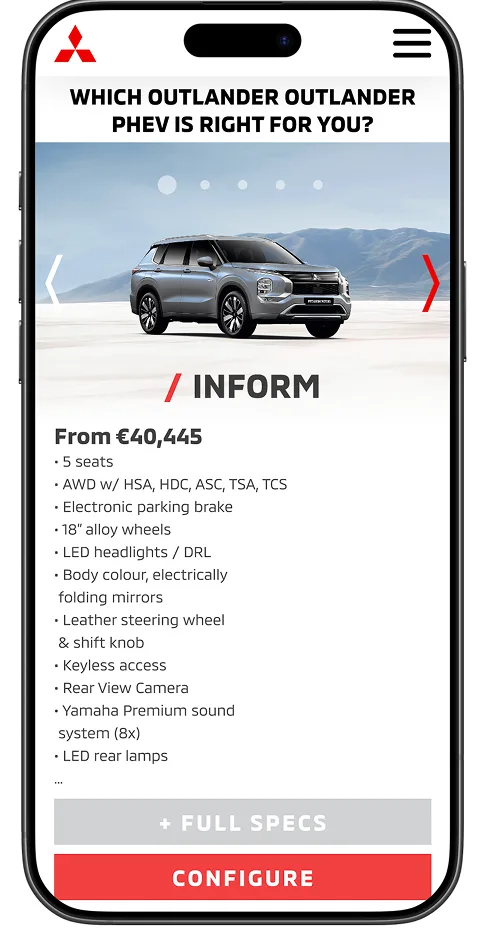
I started with the wider experience rather than redesigning the comparison module in isolation. A proposed home page established a more contemporary visual direction, supported by a new set of vehicle renders and a single image presenting the complete range. From there, I built model switching into the page itself. Visitors could move between versions directly from the hero, review the selected model and then compare its equipment with another version without leaving the flow. The visual and interface systems followed the same principle: each step up in equipment needed to feel visible.

The car was competing with the interface

The existing experience provided the necessary information, but its hierarchy made both the vehicle and the differences between versions harder to see.

A long equipment list occupied the main image, while the versions were presented as labels above it. On mobile, the same information became an extended vertical list followed by a separate comparison matrix. The experience explained what each model contained, but offered little visual reason to continue exploring the range.

The redesign needed to separate the product story from the specification detail, while keeping both within one continuous journey.

One range, with a rising sense of intensity

The equipment hierarchy became the organizing principle for the imagery.

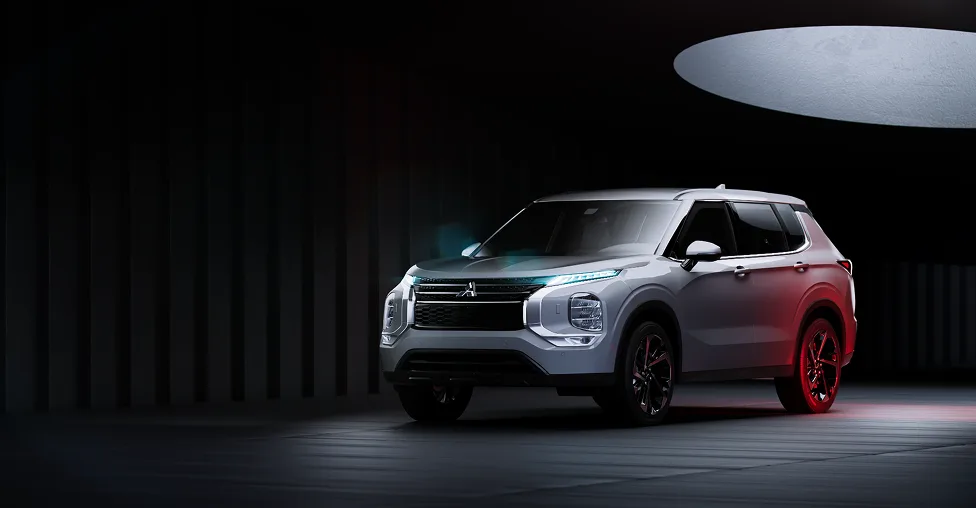
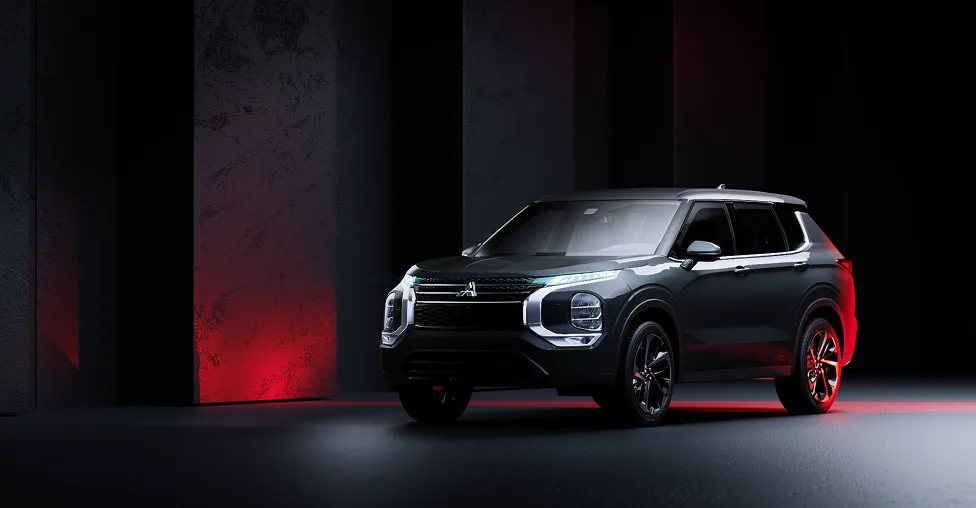
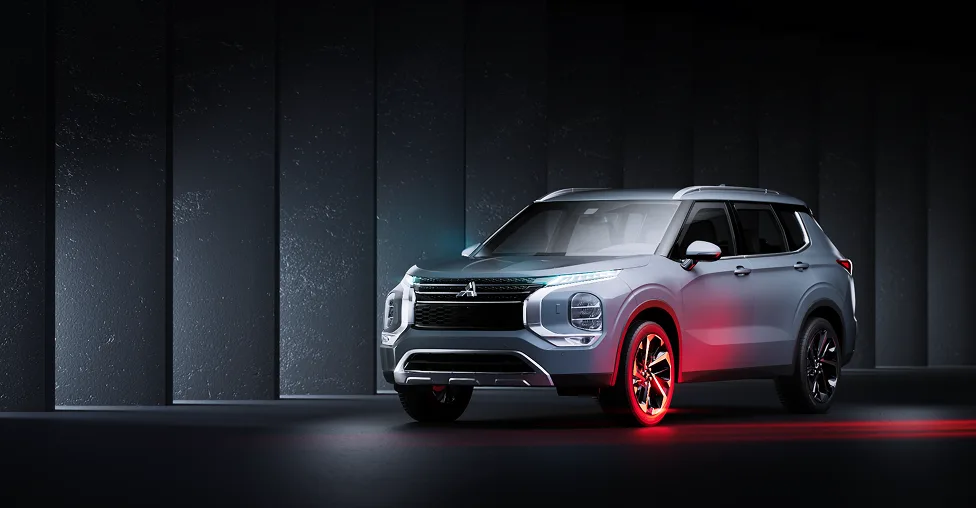
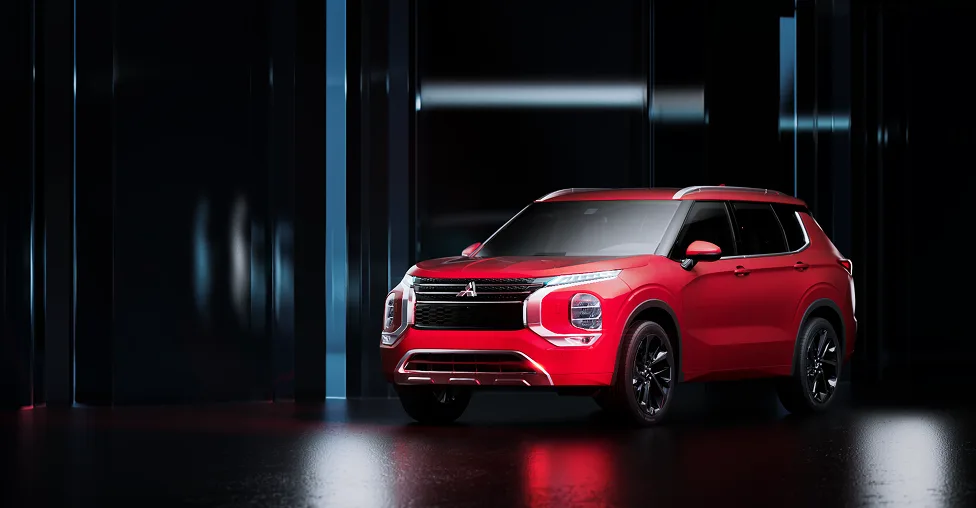
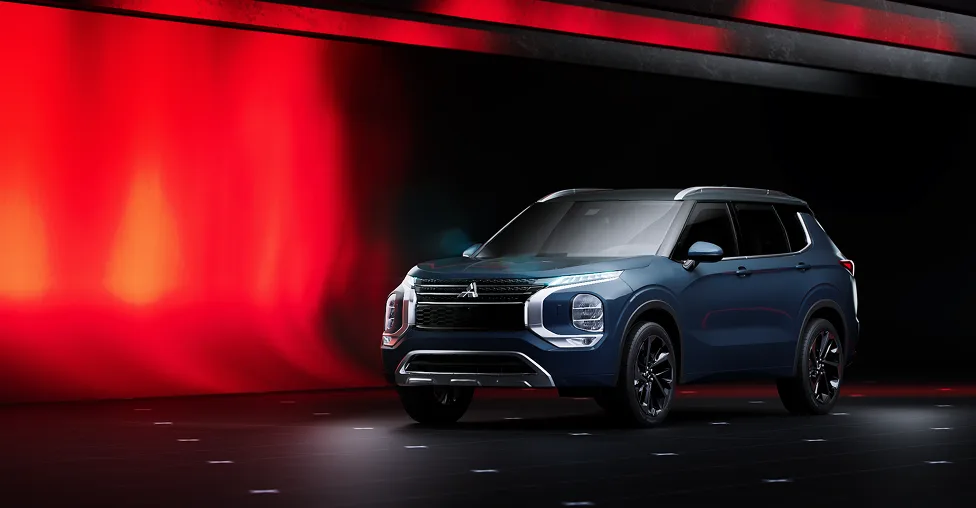
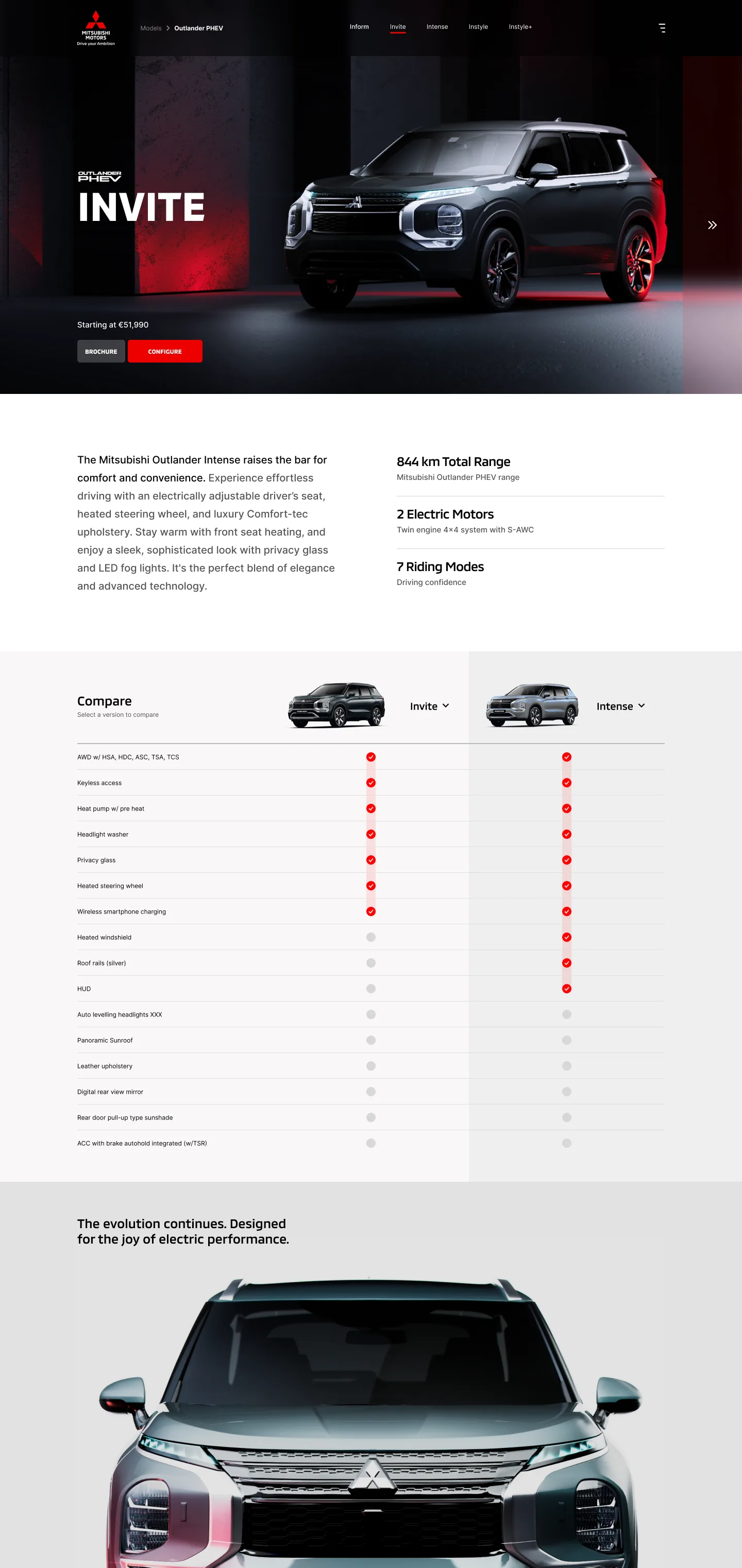
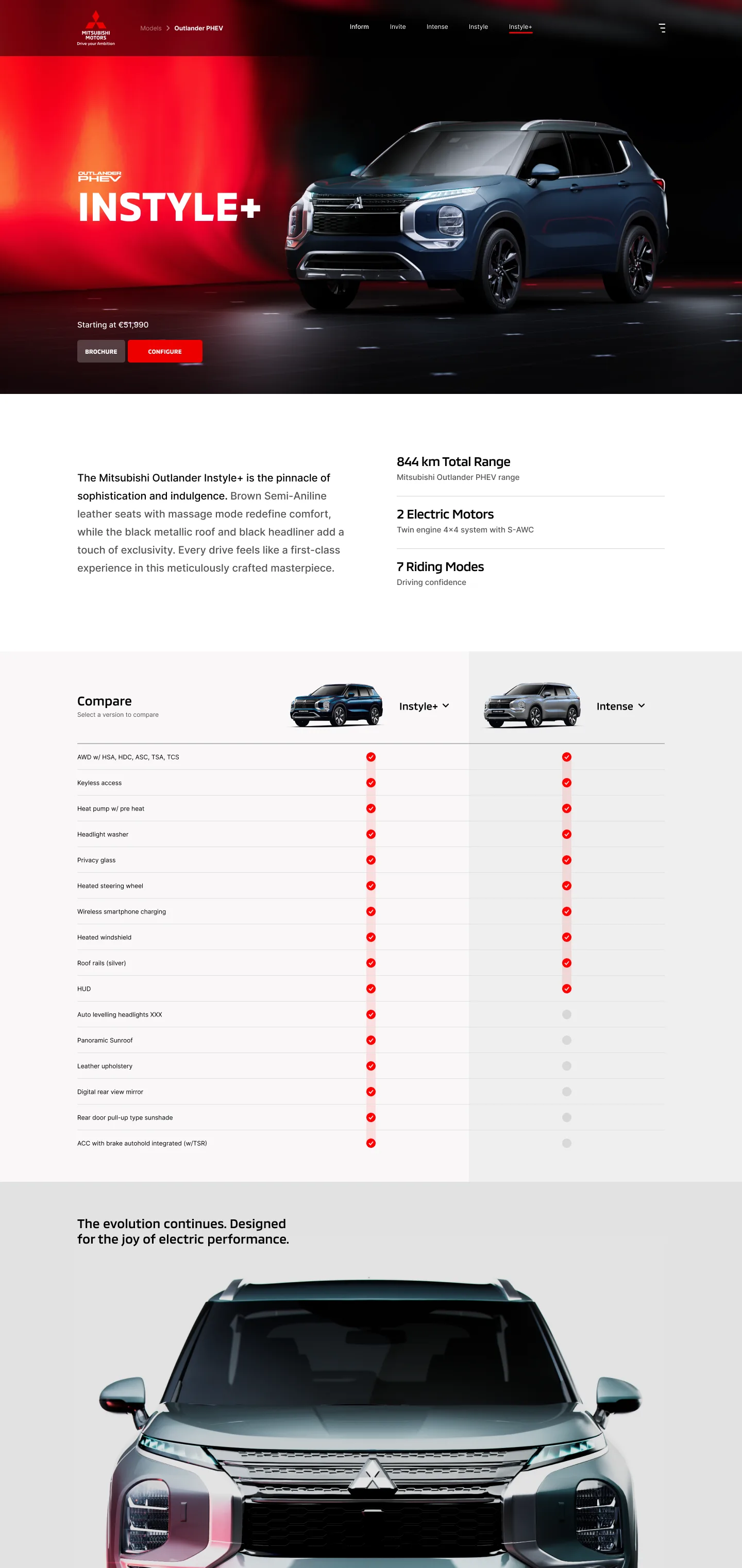
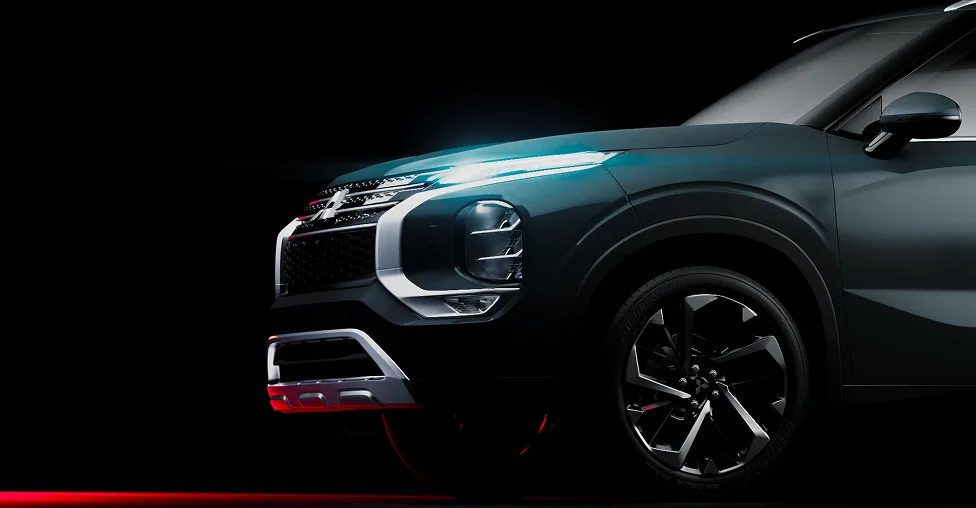
I created a series of vehicle renders built around controlled, directional red light. The lighting begins as a restrained accent and becomes more pronounced with each step through the range. The environment develops with it: deeper space, richer surfaces and a progressively more premium atmosphere.

This gave every version its own character while keeping the complete range within one recognizable visual system. The difference between models could be felt before it was explained through specifications.

Seeing the family before choosing the model

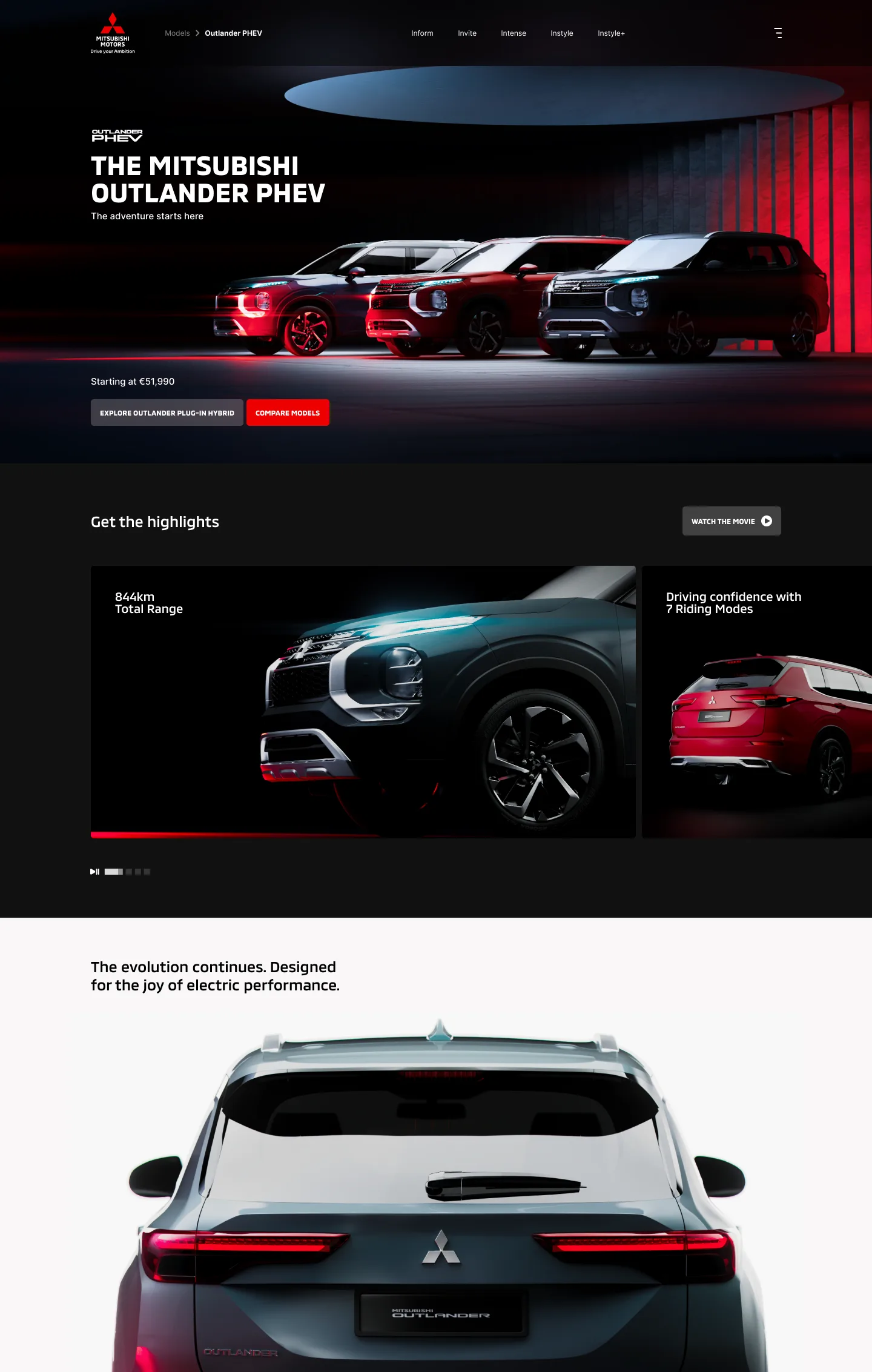
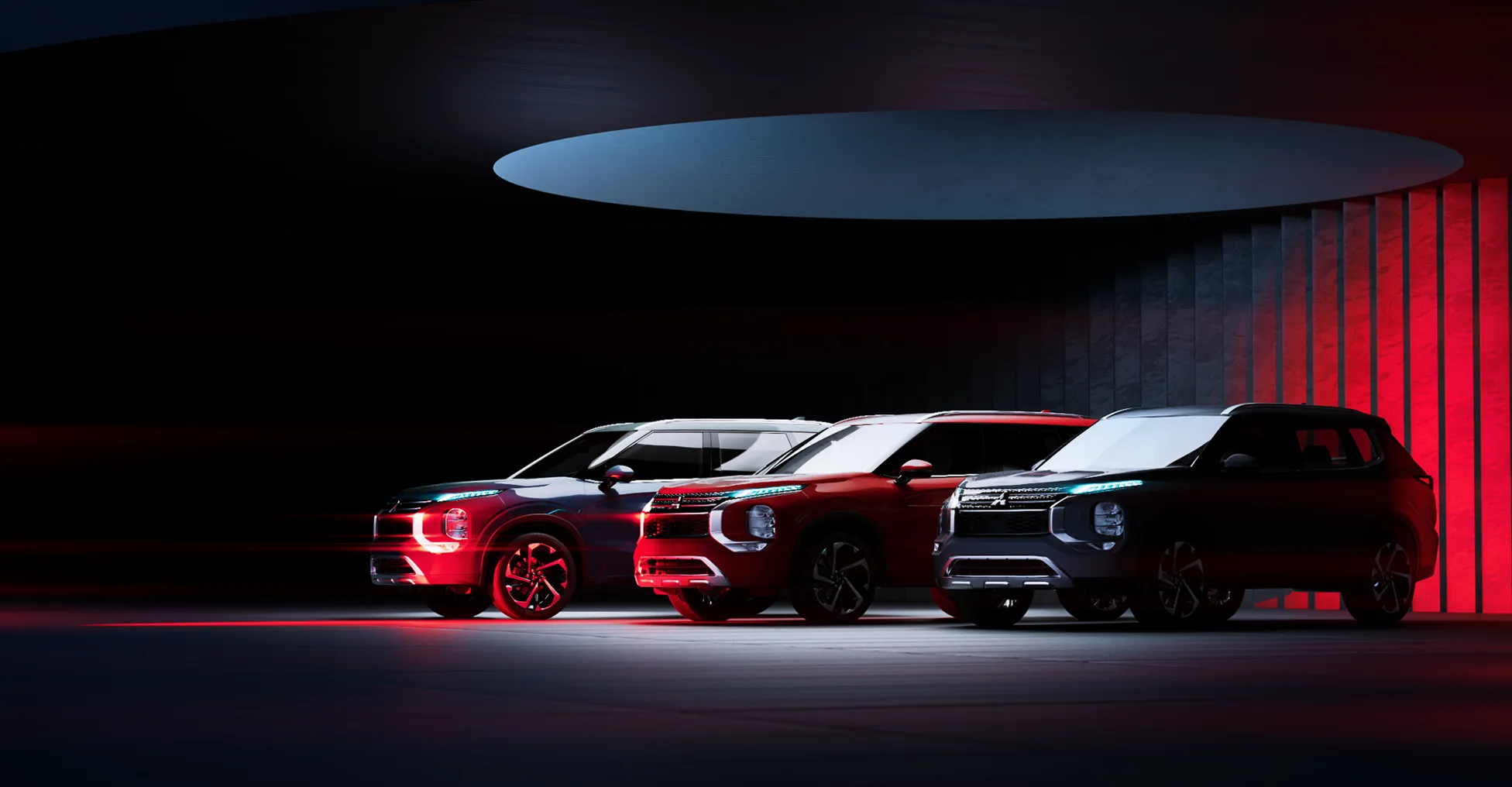
The full-range render established Outlander PHEV as one product family rather than a collection of isolated specification packages.

The range image brought all versions into a single composition. It gave the home page a clear product statement and introduced the idea that each model belongs to the same system while occupying a distinct position within it.

Instead of beginning with a table, the experience could begin with the vehicle itself.

Differences that build visibly

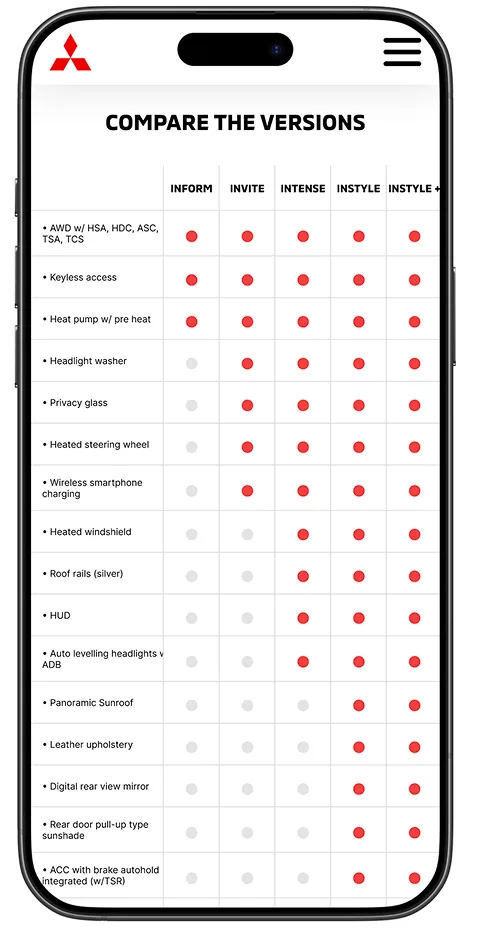
The table was designed to show progression, not simply presence or absence.

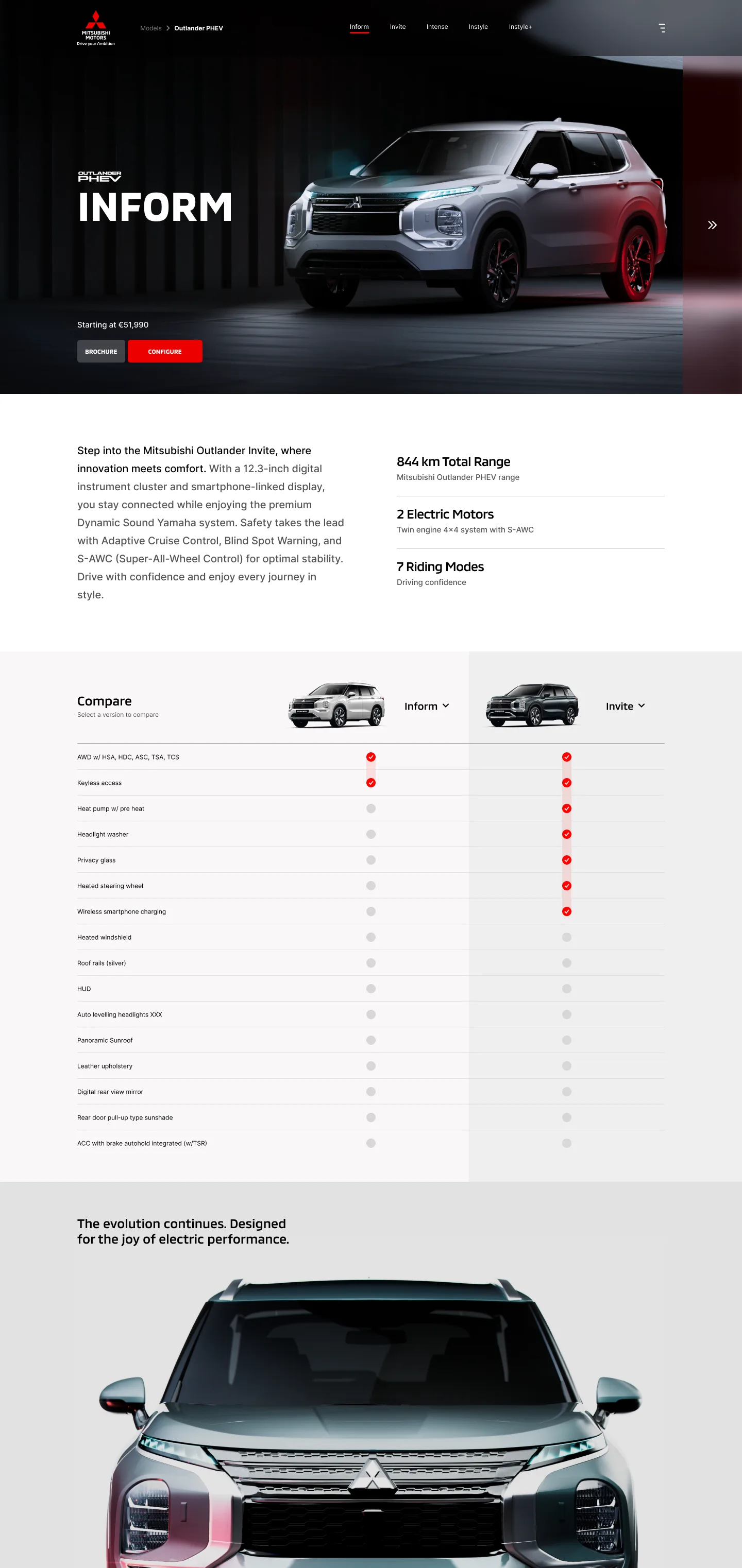
The comparison begins with two selected vehicles rather than the entire range at once. Each column includes the model image and a selector, allowing either version to be changed directly within the table.

Equipment is organized into a shared sequence below. Red markers accumulate as features are added, creating a rising visual scale across the two models. This makes the relationship between versions easier to scan: the visitor can see what both vehicles share, where they begin to differ and what the next trim level adds.

The interaction keeps comparison close to the product. Visitors do not need to return to the beginning of the experience each time they want to test a different pairing.

From visual impact to informed choice

The final page connects three parts of the decision: discovering the vehicle, understanding the selected model and comparing it with the rest of the range.

The hero gives each version an immediate identity. The content below introduces its key information without overwhelming the vehicle, while the comparison turns equipment differences into a visible progression.

Together, the visual and interaction systems make the range feel more coherent and give visitors several natural points at which to explore another version.