Beyond the Key Visual: Building a Visual System That Keeps Working
A strong key visual should not be a dead end. It should define a world that can keep growing across film, social, digital and print.

Opening note
The hero image is where a campaign begins, not where it ends.
A key visual often carries the whole idea of a campaign in one frame. It has to stop someone, explain enough and give the brand something recognisable to own. But it is almost never the only thing the campaign will need.
The same idea may have to become a film, a vertical social asset, an event screen, a website header, a product close-up or a scientific animation. Sometimes these formats are known from the start. Often they appear later, once the first image has already been approved.
When every new asset is treated as a separate adaptation, consistency becomes a repair job. Teams spend time trying to recreate the lighting, rebuild materials or force a composition into a format it was never designed for. The pieces may still look related, but the idea becomes weaker each time it moves.
A better key visual does more than finish one frame. It establishes the visual logic that makes the next frame possible.
Visual language
A system is more than a matching palette.
A visual system is not a set of images made similar by using the same colours. It is a shared way of making decisions.
It defines how the camera sees the world, how light behaves, which materials belong in it and how scale is used. It decides what stays fixed and what can change. In motion, it also shapes pace, transitions and the way information is revealed.
That logic is what allows a campaign to grow without becoming repetitive. A wide cinematic frame, a close product detail and a short social animation can look completely different in composition while still feeling as if they come from the same place.
This matters even more in healthcare. The system has to carry brand character and scientific meaning at the same time. A molecule, a patient image and an explanatory animation may serve different purposes, but they should not feel as though three separate campaigns produced them.


“The goal is not to make every asset look the same. It is to make every asset feel as if it could only belong to this campaign.”Luke Szyszka
Production thinking
Build for the second asset before the first one is finished.
The most useful time to think about campaign extensions is while the main visual is still being designed.
That does not mean producing every possible format in advance. It means making early choices with enough range built into them. A CGI scene can hold geometry beyond the hero crop. A lighting setup can work from more than one camera angle. Materials can survive both a close still and movement. A scientific metaphor can be clear enough to explain in one image, but structured enough to unfold over time.
These are creative decisions as much as production decisions. If the person shaping the visual direction understands how the world will actually be built, they can test its limits before approval. The team learns early which parts of the idea are strong and reusable, and which only work from one carefully protected viewpoint.
This is where staying hands-on matters. The distance between concept and execution becomes smaller. Instead of handing over a finished image and asking production to reverse-engineer a system from it, the system grows together with the image.
Range
Consistency should create range, not repetition.
The purpose of a system is not to repeat the hero image everywhere. It is to make more of the idea available.
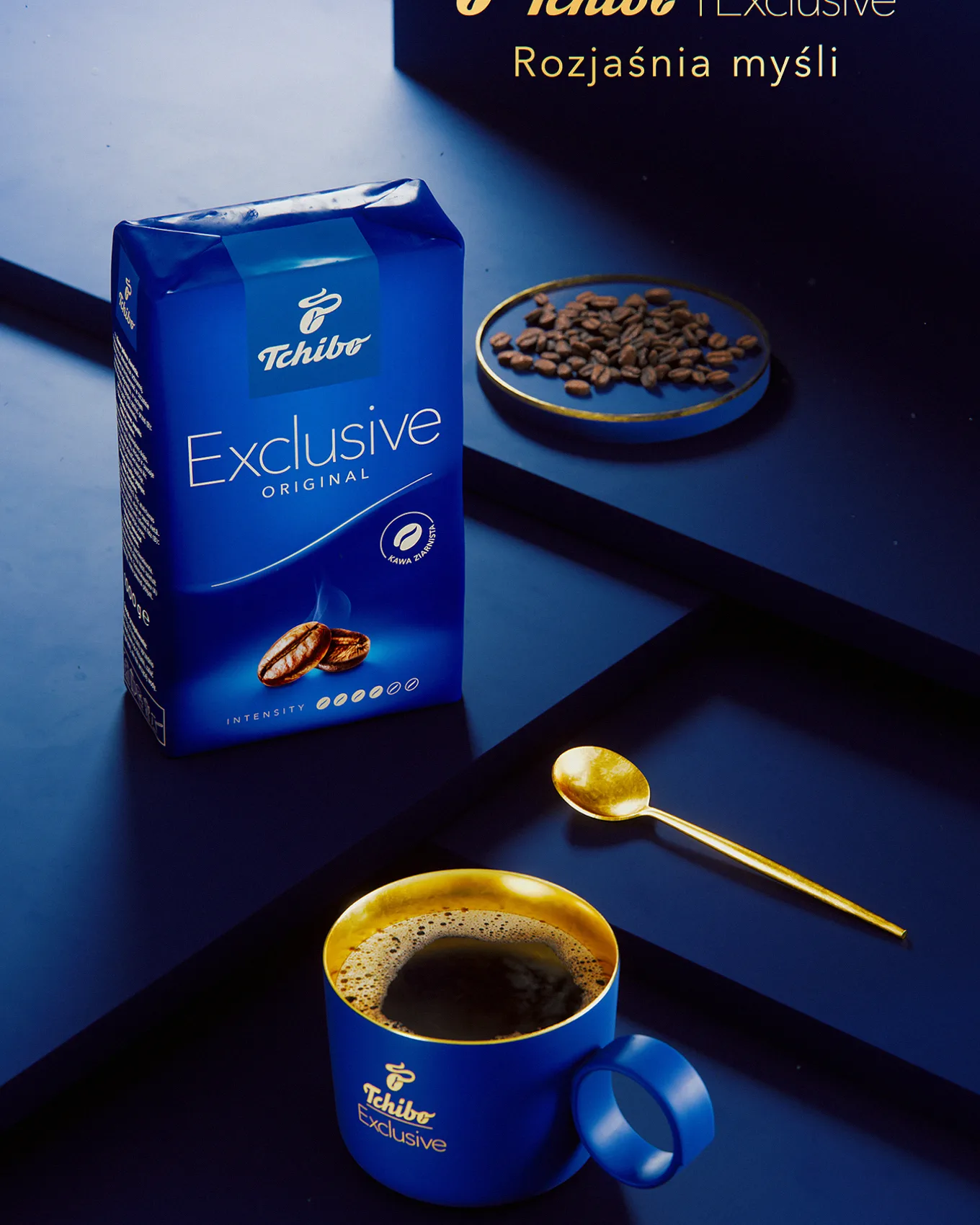
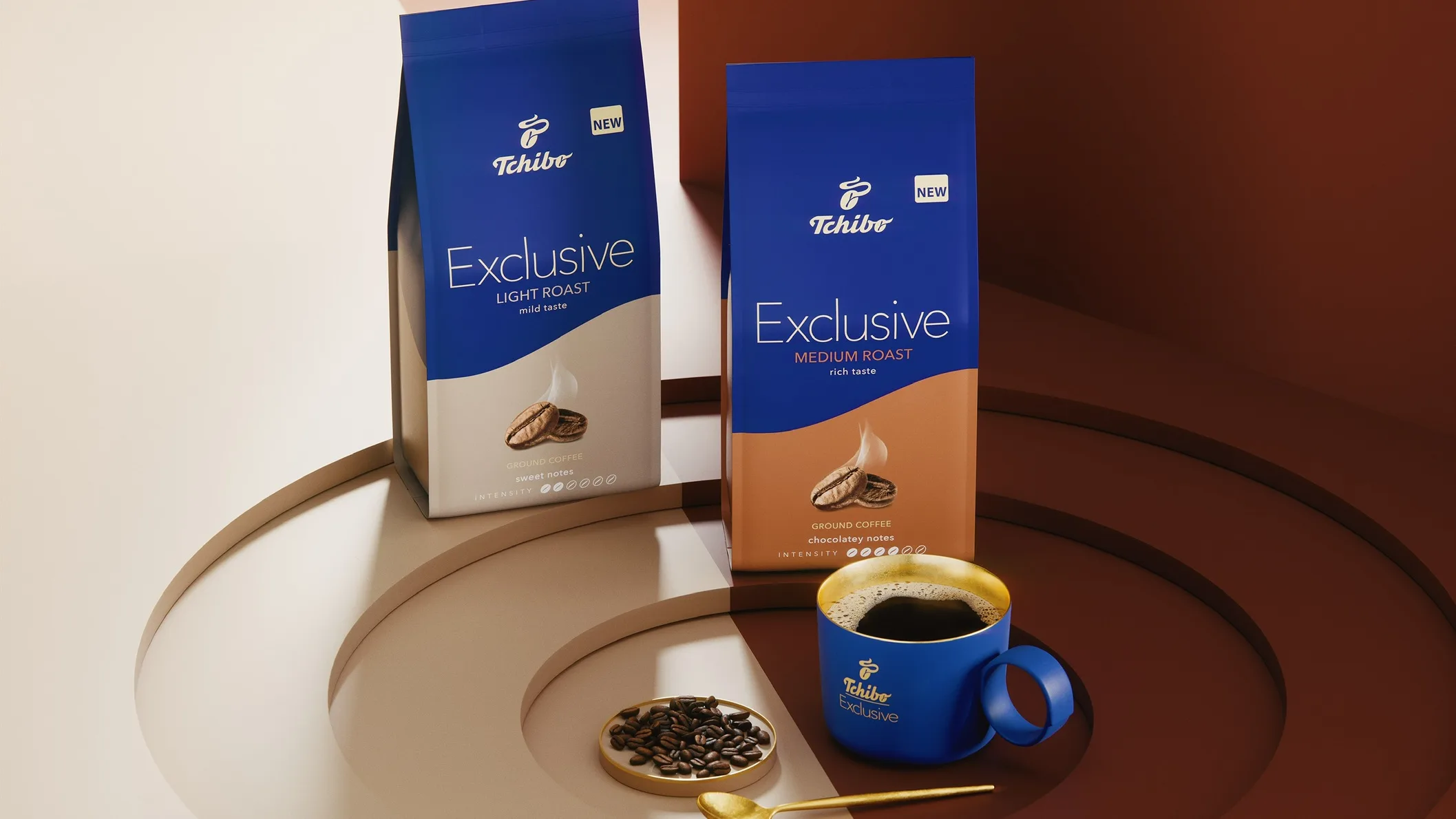
For Tchibo Exclusive, the campaign moved between intimate coffee scenes, product-focused key visuals and a larger environment built around the Mercedes-Benz grand prize. The scale changed completely, but the same controlled light, minimal staging and shared CGI asset library connected print and motion. It was one visual thought expressed in different ways, rather than one composition resized many times.
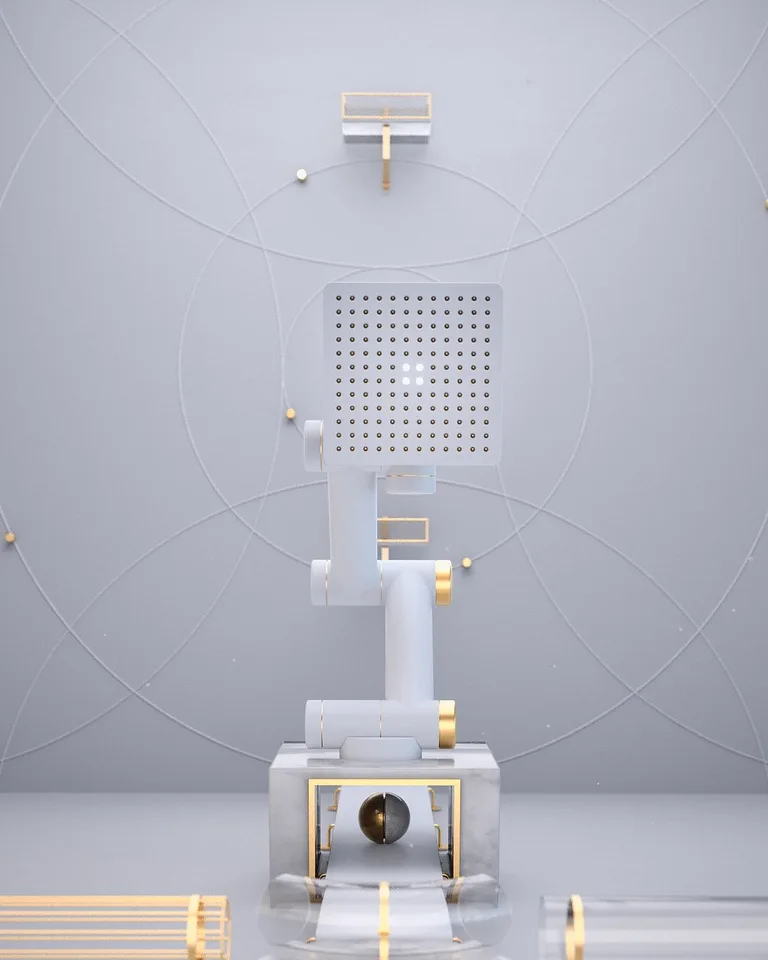
The mBank Private Banking project expanded even further. A set of soft, rendered worlds first explained the service through a hero animation. The same language then moved into a web app and a printed album. Individual scenes could change in subject and function because the forms, colour, materials and touch of gold gave them a common character.
In both cases, the system created freedom. Once the rules were clear, each format could do what it needed to do without losing the campaign around it.
Long-term value
The real value appears after launch.
A campaign rarely stops asking for assets when the main delivery is complete. New channels appear. Media plans change. A local market needs a different format. An approved film needs shorter versions, or a static image needs to become an event loop.
If the original work was built as a closed final image, each request starts another small production. If it was built as a visual system, the team already has a foundation: assets, lighting, materials, motion principles and a clear standard against which new work can be judged.
That continuity saves time, but speed is not the main benefit. The larger gain is that every new piece strengthens the same visual identity instead of slowly diluting it.
In regulated categories such as healthcare, this also gives teams something dependable to return to. Once the visual logic is understood and approved, it becomes easier to extend the campaign without reopening every decision from the beginning.
A beautiful key visual can win attention. A working visual system keeps that attention coherent across everything that follows.
The strongest campaign worlds do not become weaker as they grow. Each new asset makes the original idea clearer.
Related work


Related insights
- The Transition Is Part of the Story When a film moves between a human world and a technological or scientific one, the transition can do more than connect two shots. It can explain how those worlds relate.
-
 Compliance Is Part of the Composition
A healthcare image is not finished before the required information arrives. Composition, motion and readability need to be designed together from the start.
Compliance Is Part of the Composition
A healthcare image is not finished before the required information arrives. Composition, motion and readability need to be designed together from the start.
-
 AI Is Changing What Clients Buy, Not Just How We Make It
When AI becomes part of the agency model, faster production is only half the story. The bigger question is what clients are paying for, and where creative responsibility sits.
AI Is Changing What Clients Buy, Not Just How We Make It
When AI becomes part of the agency model, faster production is only half the story. The bigger question is what clients are paying for, and where creative responsibility sits.